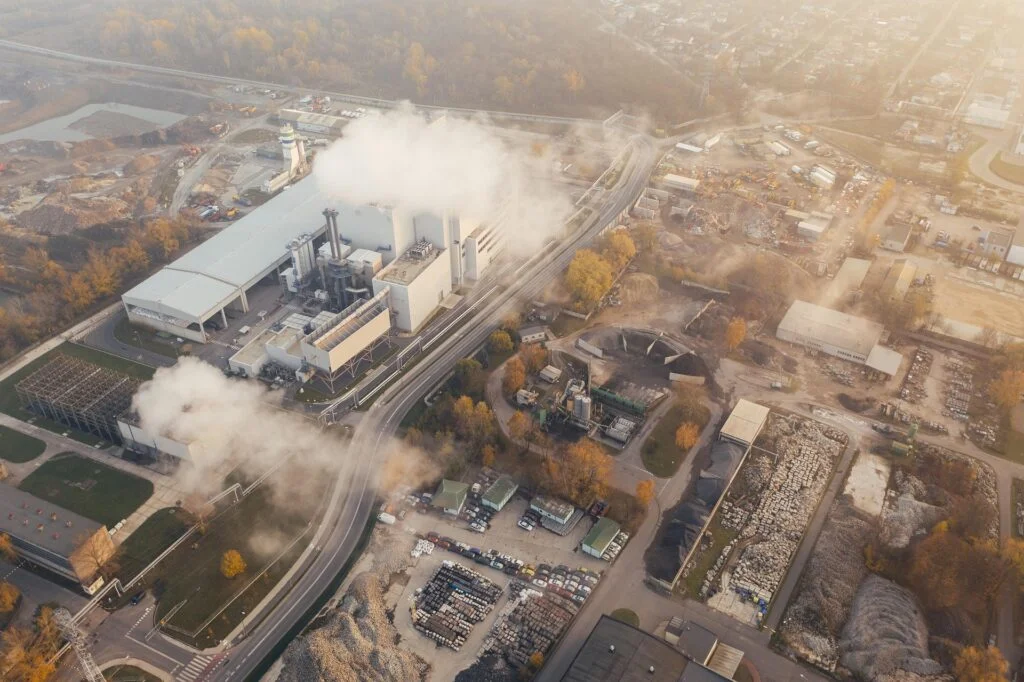
Process piping is like the circulatory system of an industrial plant. Without pipelines, factories simply could not operate. During the construction phase of a plant, process piping systems are installed to transport liquids, gases and various compounds essential to the operation of the facility.
What is process piping?
Process piping, also known as industrial piping, refers to piping systems used in production facilities such as chemical plants, pharmaceutical plants, pulp mills and various types of refineries. These systems are primarily used to transport steam, gases and liquids. Valves, control devices and measuring instruments are essential components of process piping, allowing production processes to be controlled and monitored.
Industrial piping systems are subject to strict standards and can be highly demanding to manufacture and install.
Process piping is vital to the operation of an industrial facility. Its reliability directly affects production efficiency, safety and, ultimately, the profitability of the business. During construction and installation, the role of an installation supervisor is therefore critical in ensuring the functionality and long service life of the piping system.
Responsibilities of a Process Piping Supervisor
The role of a process piping supervisor extends far beyond sitting in a site office and providing instructions. It is a dynamic combination of technical expertise, quality assurance, risk management and continuous communication with various stakeholders.
The supervisor acts as the project’s eyes and ears on site, ensuring that plans, standards and client requirements are met throughout every stage of installation.
One of the supervisor’s key responsibilities is also to support and guide the piping contractor, helping them complete their work as successfully as possible. When the contractor succeeds, both the client and the end user of the piping system benefit from a successful outcome.
Key duties and responsibilities
Ensuring compliance with piping designs:
The supervisor continuously compares the installed piping with approved designs, such as 3D models, isometric drawings and process flow diagrams, ensuring that piping routes, supports and equipment – including valves, flow measurement devices and other instrumentation – are installed exactly as designed.
Any deviations are documented, their impact on the overall system is assessed, and corrective actions or acceptable deviations are proposed to the engineering team and the client.
Managing and validating installation documentation:
The supervisor ensures that all documentation required for installation work – including isometric drawings, P&ID diagrams, material certificates and welding documentation (WPS/WPQR) – is accurate and up to date on site.
Visual inspections are carried out to verify that the materials and components used comply with specifications and procurement documentation.
Ensuring compliance with installation standards and procedures:
The supervisor ensures that all installation work is performed in accordance with applicable industry standards, national regulations – including pressure equipment legislation – and project-specific quality requirements.
This includes inspecting and documenting welding work, piping supports and equipment, as well as other critical installation stages.
Quality control and Inspection and Test Plans (ITP):
The supervisor performs inspections in accordance with the project’s Inspection and Test Plan (ITP) throughout different stages of installation.
These may include internal cleanliness inspections of piping, dimensional inspections of prefabricated components, visual testing of welds (VT), preparation for non-destructive testing (NDT) such as RT, UT, PT and MT, and reviewing the resulting inspection reports.
Any non-conformities are documented and corrective actions are required.
Schedule and cost monitoring:
Continuous communication with site management and contractors allows the supervisor to closely monitor project progress.
Potential deviations from the schedule or budget are reported proactively, while solutions are developed together with the project team. The approval and documentation of modifications and additional work carried out on site are also part of the supervisor’s responsibilities.
Risk and deviation management:
The supervisor proactively identifies and reports risks that could compromise project safety, quality or schedule.
They actively participate in problem-solving and ensure that corrective measures are implemented quickly and effectively, while documenting all deviations and their resolutions.
Cooperation and communication:
The supervisor acts as a link between different stakeholders, including engineering teams, procurement, installation contractors, NDT service providers, the client and regulatory authorities.
Clear, regular and technically accurate communication is essential to ensure that all parties remain informed about the project’s progress and any potential challenges.
More Than Just Supervising Installations
The work of a process piping supervisor involves much more than technically inspecting installations or signing off the final documentation. Above all, it involves responsibility for safety, correct working practices and the management of risks in the working environment.
Every employee has a responsibility to perform their work safely, but the supervisor plays a particularly important role because they maintain an overview of the worksite and monitor potential hazards, ensuring that any deficiencies are corrected immediately.
Piping installation involves a wide range of safety risks that require constant attention:
Hazardous exposure during welding:
Welding stainless steel generates hazardous gases and particles, including chromium- and nickel-containing particles that can be toxic and carcinogenic.
The supervisor must ensure adequate ventilation in welding areas and that welders use appropriate personal protective equipment (PPE), including welding helmets with powered air-purifying respirators where required. Fumes and gases generated by other welding methods, such as MIG/MAG welding, must also be properly controlled.
Sparks and fire safety:
Sparks generated by welding and grinding present a significant fire risk, particularly when combustible materials or flammable liquids and gases used in the process are nearby.
The supervisor is responsible for ensuring that fire-risk areas are properly protected, fire protection measures are in place and adequate first-response firefighting equipment, such as fire extinguishers and fire blankets, is readily available and operational.
Hot work must be carried out in accordance with the applicable permit system, and appropriate fire watch procedures must be arranged.
Confined spaces and working at height:
Piping installation is often carried out in confined or difficult-to-access locations, or at height using scaffolding and lifting platforms.
The supervisor must ensure compliance with occupational safety requirements, including the use of guardrails and protective structures, personal fall protection equipment and appropriate rescue plans.
Physical hazards:
Noise, vibration, compressed air, electricity and moving machinery create continuous risks on industrial worksites.
The supervisor must ensure that safe working practices are followed and that all appropriate protective measures and equipment are in place.
Skills Required of a Process Piping Supervisor
The role of a process piping supervisor requires broad and in-depth technical expertise as well as the ability to apply that knowledge in practical site conditions.
Theoretical knowledge alone is not enough. Successful supervision requires the ability to read and interpret detailed engineering documentation, identify deviations and solve problems proactively.
Key areas of expertise
Knowledge of standards and regulations:
In-depth knowledge of relevant industry standards, national construction regulations and, in particular, the requirements of the Pressure Equipment Directive (PED) is essential.
The supervisor must be able to ensure that installations are not only technically functional but also compliant with legal and safety requirements. This includes material approvals, validation of welding procedures and supervision of pressure testing.
Process knowledge and understanding of plant operations:
The supervisor must have sufficient understanding of the process, including basic knowledge of the fluids being handled, their properties – such as temperature, pressure and corrosiveness – and their effects on the process.
A broad understanding of the process enables the supervisor to understand why piping systems are located where they are, the purpose of individual pipelines and instruments, and what piping modifications can be made when necessary without adversely affecting the process.
Understanding of piping design principles:
The supervisor must be able to read and understand the technical basis of piping design, including P&IDs, isometric drawings, 3D models, piping routes, support structures, connection details and instrumentation layouts.
They must be able to identify differences between the design and the actual installation and communicate these effectively to the engineering team. This also enables constructive dialogue with designers regarding potential improvements.
Knowledge of materials and welding technology:
The supervisor must understand the properties of different piping materials, including steels, alloy steels and plastics, as well as their weldability and handling requirements.
They must be able to assess the suitability of welding procedures (WPS), verify welder qualifications (WPQ) and perform visual testing of welds (VT).
Knowledge of non-destructive testing methods such as RT, UT, PT and MT and their appropriate applications is also highly beneficial.
Quality management and documentation:
The ability to implement Inspection and Test Plans (ITPs) and maintain accurate documentation of all installation stages, inspections and deviations is essential.
Proficiency in digital tools, such as document management systems and electronic inspection forms, is necessary to ensure efficient information flow and full traceability.
Problem-solving and communication:
The supervisor often acts as a bridge between different stakeholders. Strong communication skills and the ability to solve problems flexibly and with a solution-oriented approach are therefore essential.
They must be able to communicate technical observations clearly, negotiate effectively and find common ground in challenging situations.
Summary
Process piping supervision is not simply about technical inspection. It is about managing the entire installation process through a combination of technical expertise, proactive problem-solving and close cooperation with all stakeholders.
Professional supervision is one of the key factors in ensuring that an industrial project is completed safely, to a high standard and on schedule.
It ensures that the plant’s “circulatory system” operates in accordance with its designs and applicable standards, serving its users reliably for decades while also helping the contractor succeed in their work.
At Prenner, we understand the demanding nature of industrial projects and provide high-quality process piping installation supervision services. Our specialists are experienced professionals with in-depth knowledge of industry standards, the Pressure Equipment Directive and the specific requirements of the process industry.
We focus on proactive supervision, accurate documentation and open communication to ensure that your piping project progresses according to plan and delivers the desired results. Contact us to discuss how we can help ensure the success of your piping project.